
Blog
Types of Socks: A Complete Guide for Bangladesh (2026)

Socks are sorted three ways: by length, by material, and by use case. Most people in Bangladesh only think about the first one. That is why so many of us end up with socks that slip inside loafers, show above the ankle in formal trousers, or smell by 4pm.
The length decides how the sock looks. The material decides how your feet feel eight hours later. Get both right and you stop thinking about your socks entirely, which is the point.
Here is every type worth knowing, what it is actually for, and what it costs in Bangladesh.
Quick guide to sock types
| Type | Where it sits | Best for | Look for |
|---|---|---|---|
| No show | Below the shoe line, invisible | Loafers, sneakers, summer | Silicone heel grip |
| Loafer socks | Just under the ankle bone | Formal loafers, casual shoes | Combed cotton, low back |
| Ankle socks | At or just above the ankle | Sneakers, daily wear, gym | Ribbed cuff |
| Crew socks | Mid-calf, 15 to 20 cm above the ankle | Office, casual, cool weather | Cotton with spandex |
| Mid-calf / long | Halfway up the calf | Formal trousers, winter | Non-slip cuff |
| Knee-high | Just below the knee | Football, school uniform, winter | Elastic that holds shape |
| Formal / business | Mid-calf, thin, plain or subtle pattern | Office, suits, weddings | Fine gauge combed cotton |
| Sports socks | Ankle or crew, cushioned | Gym, running, badminton | Cotton with polyamide |
| Football socks | Knee-high, thick sole | Football, turf, cricket | Towel bottom, rubber grip |
| School socks | Ankle or crew, white or grey | School uniform | Durable cotton, tight weave |
| Winter / thermal | Crew or long, thick | Cold season, indoor floors | Terry loop, plush knit |
| Compression socks | Ankle to knee, graduated pressure | Long travel, swelling, standing jobs | Medical grade rating |
Socks by length
No show socks
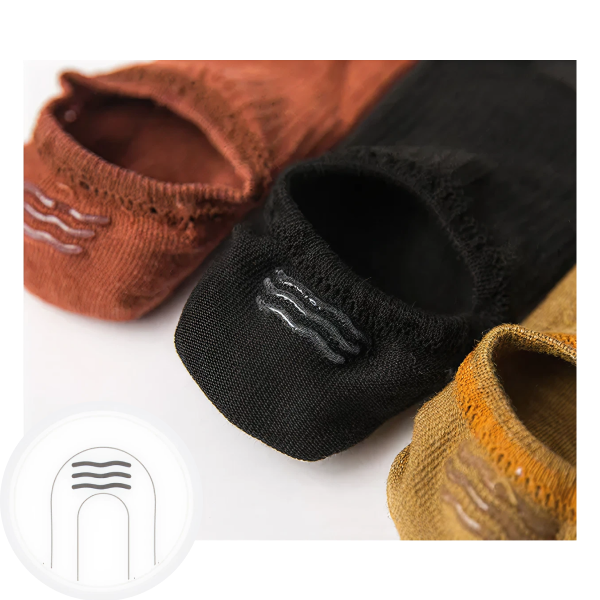
No show socks sit below the line of the shoe. Wear them and nothing is visible above the shoe opening. They exist for one reason: to give you a cotton layer between your foot and the shoe without anyone seeing it.
The failure point is always the heel. A no show sock without a silicone grip strip will slide down inside the shoe within an hour, and then you are stopping on the road to fix it. Check for the grip before you buy.
Best for loafers, boat shoes, low-cut sneakers, and Dhaka summer. Expect 400 to 500 BDT for a multi-pair pack of good ones.
Loafer socks
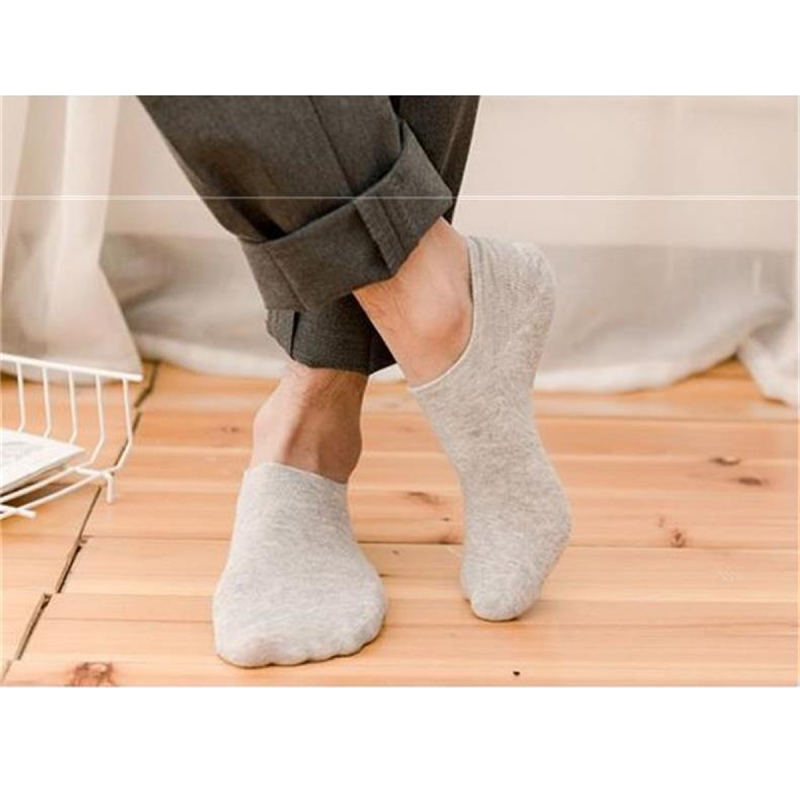
Loafer socks sit a little higher than no show socks, usually just under the ankle bone. A thin sliver may show if you are wearing very low-cut shoes, which is fine, and many people prefer them because they stay put more reliably than true no shows.
This is the most practical sock for formal loafers in Bangladesh. You get sweat absorption and odour control without the sock breaking the line of your trousers. If your feet sweat a lot, look for an antibacterial finish.
Kozy’s Men’s Antibacterial No Show Loafer Socks run 390 BDT for four pairs.
Ankle socks
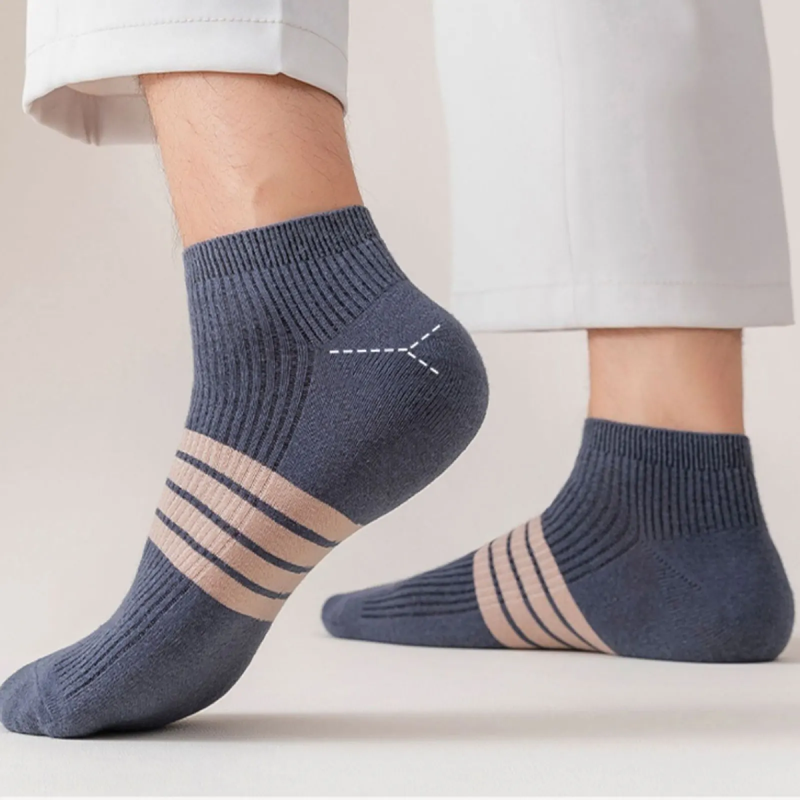
Ankle socks end at or just above the ankle bone. This is the default daily sock for most people and the most versatile length in any drawer.
They work with sneakers, casual shoes and gym shoes. They are also the right length for anyone who finds crew socks too warm, which in Bangladesh is most of the year.
The thing to check is the cuff. A weak cuff rolls down. A properly ribbed cuff with spandex holds position through the day.
Crew socks
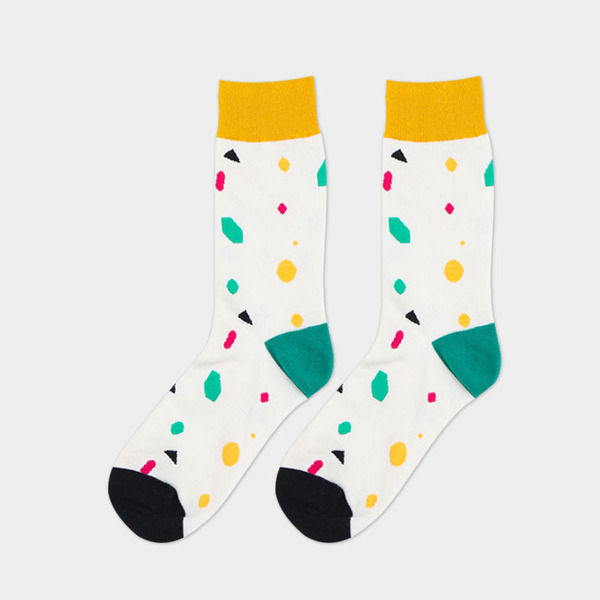
Crew socks reach roughly 15 to 20 cm above the ankle, sitting at mid-calf. This is the classic sock length and the one that pairs with almost everything.
Crew length is the safe choice for office wear because it covers the leg when you sit down and cross your legs. Nothing shows. With ankle socks or shorter, sitting down exposes skin between the trouser hem and the sock, which most people want to avoid in a formal setting.
Crew socks also carry pattern well, which is why funky designs usually come in this length. Kozy’s Premium Cotton Crew Socks sit at 349 BDT.
Mid-calf and long socks
Long socks go higher than crew, covering most of the calf. In Bangladesh they are mostly bought for winter, for indoor floor wear, and for a Korean-inspired look that has become popular with younger buyers.
Terry-lined long socks are the warmest option for the cold months and for tile floors in the morning. They are thick, so they need a shoe with room.
Knee-high socks
Knee-high socks stop just below the knee. Two groups buy them: football players who need shin pad coverage, and school students whose uniform requires them.
The whole test for a knee-high is whether the elastic holds after twenty washes. Cheap ones sag to the ankle by the third month. A knee-high that will not stay up is worse than no sock.
Socks by material
Length is what you notice in the mirror. Material is what you notice at the end of the day. This is where most cheap socks in the Bangladeshi market fail.
Combed cotton
Combed cotton is regular cotton that has been mechanically brushed to remove short fibres and impurities before spinning. What is left is longer, smoother and stronger.
The practical difference: combed cotton socks are softer against the skin, they pill less, and they hold shape longer than standard cotton. They also absorb sweat instead of trapping it against your foot, which is the whole reason feet stay comfortable through a workday.
Almost every sock in the Kozy range is combed cotton blended with spandex, usually in the 75 to 85 percent cotton band. That blend keeps the absorption of cotton while giving the sock enough stretch to hold its shape.
Polyester
Polyester is the cheapest fibre a sock can be made from, which is why so much of the local market runs on it. It is also the reason your feet smell.
Polyester does not absorb moisture. Sweat sits on the surface of the fibre and on your skin. Bacteria feed on that sweat, and the by-product is the odour you notice when you take your shoes off. Cotton pulls the moisture into the fibre and away from the skin, so there is less for bacteria to work with.
Polyester socks also tend to feel slick rather than soft, and many people report itching after a few wears. If a pair of socks costs 40 BDT, it is polyester. There is no way around the fibre economics.
Cotton and polyamide blends
Polyamide, also sold as nylon, gets added to cotton for strength and low weight. This matters most in sports socks, and the reason is specific.
Cotton can absorb close to eight times its own weight in water. In an office that is a benefit, because the sock quietly soaks up the day’s sweat. During a football match it becomes a problem, because a fully saturated cotton sock is heavy, slow to dry, and rubs. Polyamide in the blend keeps the sock light and speeds drying while cotton still handles the comfort against your skin.
So a cotton-heavy blend for daily and formal wear, and a cotton-polyamide blend for sport. They are not interchangeable.
Bamboo fibre
Bamboo viscose is soft, naturally breathable, and slightly better than cotton at moisture wicking. It also resists odour well. The trade-off is durability. Bamboo socks tend to thin out faster than combed cotton at the heel and toe, and they cost more.
Worth it if odour is your main complaint and you are willing to replace pairs more often.
Wool and thermal knits
Wool is the warmest natural sock fibre, but full wool socks are rare in Bangladesh and rarely necessary. For the December to February window, a thick terry-loop cotton sock does the job at a fraction of the price. Terry loops trap air, which is what actually keeps your feet warm.
Socks by use case
Formal and business socks
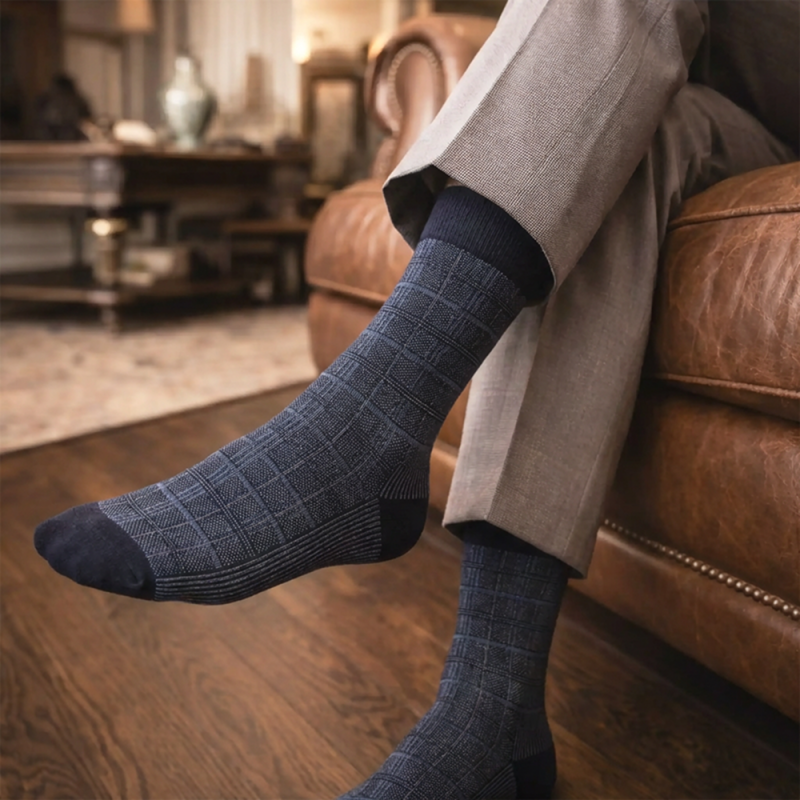
The formal sock has three jobs: reach mid-calf so no skin shows when you sit, stay thin enough to fit inside a dress shoe, and not smell after nine hours in that shoe.
That combination rules out thick socks and rules out polyester. A fine-gauge combed cotton in a dark solid or a subtle pattern is the standard. Match the sock to the trouser, not to the shoe.
This is Kozy’s core category. The Premium Formal Business Socks sit at 249 BDT. Browse the full range in Men’s Socks.
Sports socks
A sports sock needs cushioning under the heel and ball of the foot, a snug arch so it does not shift mid-movement, and a blend that dries fast.
Short sports socks work for gym, badminton and running. Look for a non-slip design and sweat absorption in the same pair. Kozy’s Men’s Short Sports Socks come in a five-pair pack at 449 BDT.
For yoga and studio work, a mid-calf combed cotton sock with a deodorant finish is the better pick.
Football socks

Football socks are their own category, not just tall sports socks. They need to cover the shin pad, grip inside the boot, and take a beating on turf.
The features that matter are a thickened towel bottom for impact absorption and a non-slip rubber grip that stops the foot sliding inside the boot. Kozy stocks both long tube at 399 BDT and mid tube at 289 BDT.
School and kids socks
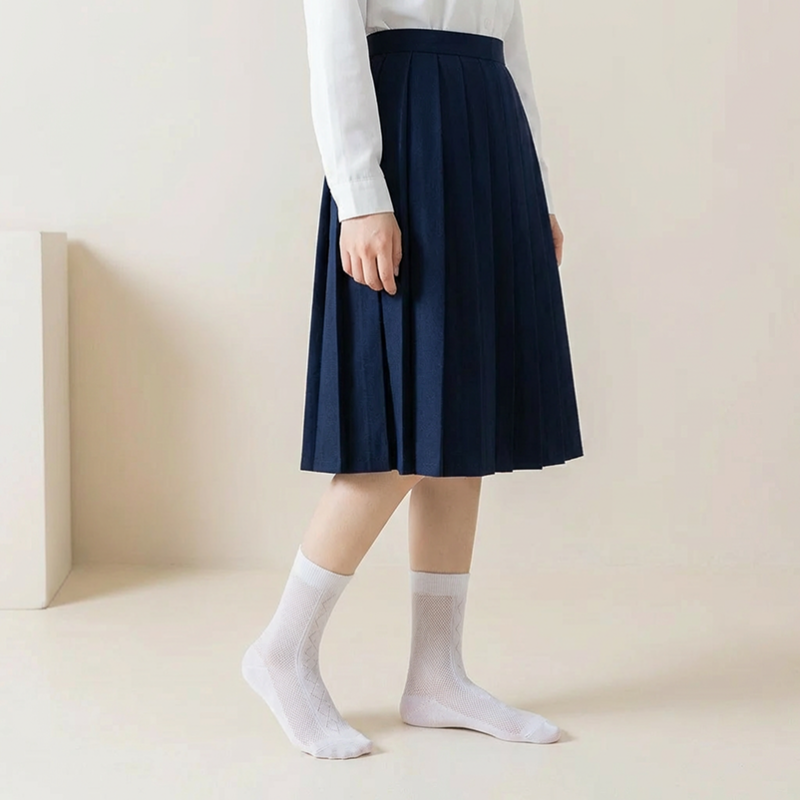
School socks get washed more than any other sock in the house, so weave density matters more than softness. A loose knit goes see-through at the heel within a term.
For children under eight, the priority is a soft cuff that does not leave marks on the leg and a cotton content high enough to handle a full day of running. Kozy’s Premium Cotton School Socks are 199 BDT, and the Kids Socks collection covers ages three to eight in five-pair packs.
Women’s socks
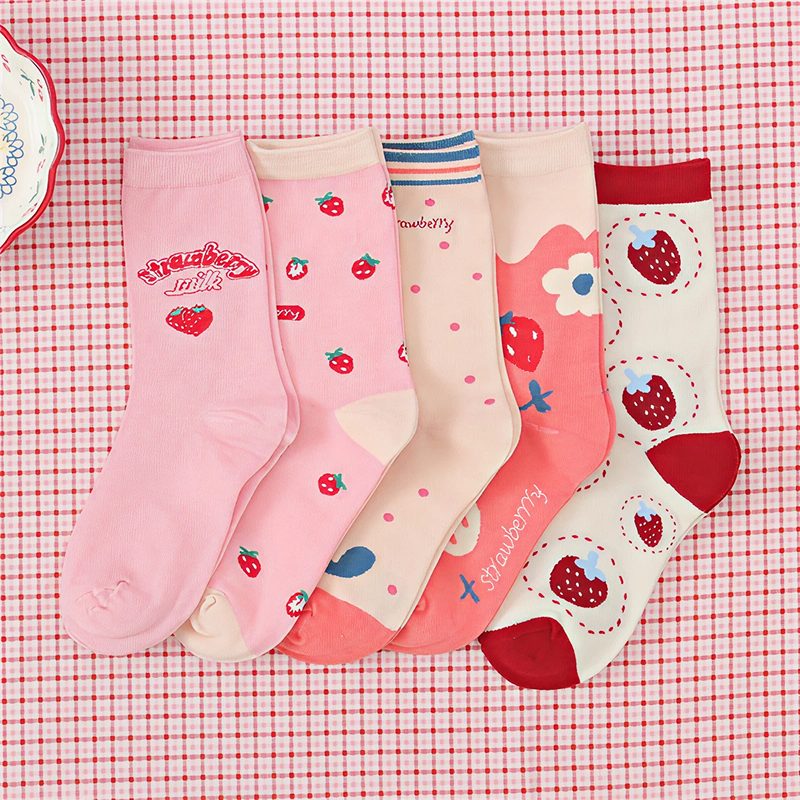
Women’s socks in Bangladesh split into three clear needs. Invisible socks for flats and loafers. Mesh or thin ankle socks for summer. Patterned mid-calf and high-top socks worn as part of the outfit rather than hidden under it.
The third group has grown fastest. Korean-style thin cotton socks, floral cut-outs and colour-blocked high tops are now bought to be seen. Browse Women Socks for the current range, priced from 249 BDT.
Winter socks

For the short Bangladeshi winter you need one or two pairs, not a drawer full. A terry-lined long sock or a plush mid-calf pair handles both cold mornings and cold floors. Thickness is the point here, so buy a size that still leaves room in your shoe. For a full breakdown of materials and warmth levels, see our guide to the best socks for winter in Bangladesh.
What about compression socks?
Compression socks apply graduated pressure, tightest at the ankle and looser as they go up the leg. That pressure helps blood return from the legs toward the heart.
They are useful for long flights, for people who stand all day, and for anyone dealing with leg swelling or varicose veins. They are a medical product, not a comfort product. If you are buying them for a health reason, get the compression level right with a doctor rather than guessing. A regular sock, however good, does not do this job.
How to pick the right sock in 30 seconds
- Start with the shoe. Loafer or low sneaker means no show or loafer socks. Dress shoe means formal crew. Boot or football boot means long.
- Then the duration. Over six hours in closed shoes means combed cotton, no exceptions. Under two hours, material matters less.
- Then the season. December to February allows terry or plush. The rest of the year, thin and breathable.
How to make socks last longer
- Wash cold and turn them inside out first, so the sweat side gets cleaned properly
- Skip the dryer and skip direct strong sun, both of which kill elastic
- Rotate pairs instead of wearing a favourite twice a week, since elastic needs a day to recover
- Wash them with like colours and avoid bleach on white socks, which weakens the fibre over time
Frequently asked questions
What are the main types of socks? Socks are grouped by length, material and use case. By length: no show, loafer, ankle, crew, mid-calf and knee-high. By material: combed cotton, polyester, cotton-polyamide blends, bamboo and wool. By use case: formal, sports, football, school, casual and winter.
Which socks are best for office wear in Bangladesh? Mid-calf combed cotton socks. The length covers your leg when you sit, and combed cotton absorbs sweat through a long day in closed shoes. Avoid polyester, which traps moisture on the skin and causes odour by the afternoon.
Are bamboo socks better than cotton? Bamboo is slightly better at wicking moisture and resisting odour. Combed cotton is more durable and costs less. For daily wear where socks get washed constantly, combed cotton usually gives better value. Choose bamboo if odour is your specific problem.
What socks should I wear with loafers? No show or loafer socks. Both keep the clean ankle line that loafers are designed for. Make sure the pair has a silicone heel grip, otherwise the sock slides down inside the shoe and bunches under your arch within an hour.
Why do my socks smell after one day? Usually the fibre, not your feet. Polyester does not absorb sweat, so moisture stays on your skin where bacteria break it down and produce odour. Switching to combed cotton with an antibacterial finish solves it for most people.
What sock size should I buy? Most socks in Bangladesh come in free size for adults, fitting roughly EU 39 to 44. Kids sizes are sold by age band. If a sock leaves a deep mark on your calf, the cuff is too tight and the elastic will fail early.
Start with the one you wear most
Most people own eight pairs of the wrong sock and none of the right one. Pick the situation you are in most often, whether that is nine hours in office shoes, four days a week at the gym, or a child in school five days a week, and get that one right first.
For office wear, start with Men’s Socks. Combed cotton, mid-calf, and no smell at 6pm. Delivery is free across Bangladesh on orders over 990 BDT.
 No-Show/Loafer
 Ankle
 Long Socks
 Semi-Long