
Blog
Sports Socks in Bangladesh: What Actually Works for Running, Football, Gym & More

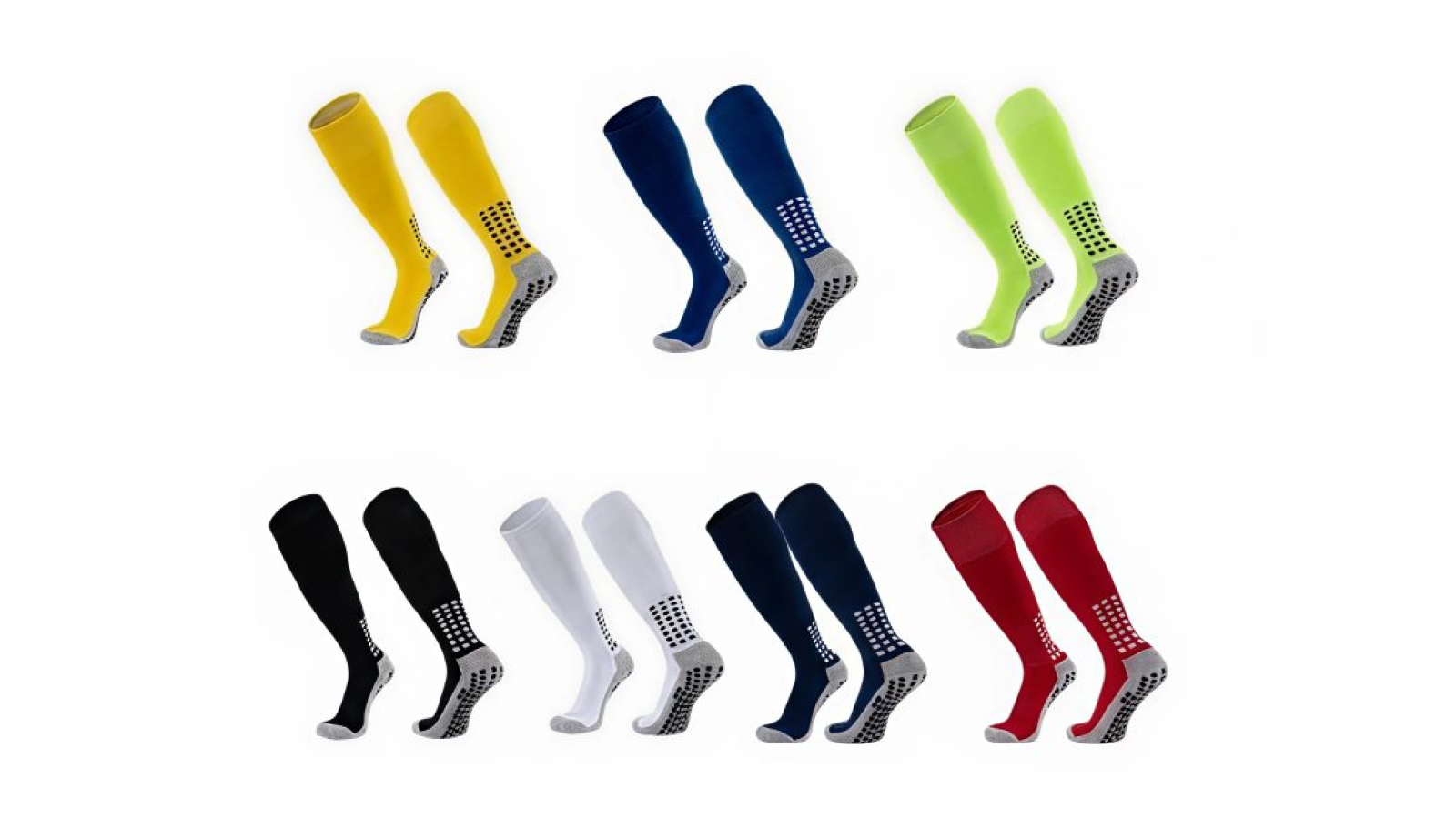
If you play football on artificial turf, run around Hatirjheel, spend an hour in the gym, or play badminton every week, you probably think a lot about your shoes.
I think you should think a little more about what goes inside them.
That sounds like a small thing. It isn’t.
A sports sock sits directly between your skin and your shoe. It deals with sweat, friction, heat, impact and movement every time you train. Get it wrong and you notice it quickly: wet feet, slipping socks, blisters, bad smell, uncomfortable shoes.
I started looking at sports socks more seriously while building Kozy Fashion because I kept seeing the same problem in Bangladesh. Socks were being treated as a cheap accessory rather than a piece of sports equipment.
And a lot of the advice online is either too generic or simply wrong for our climate.
So in this guide, I want to explain what I have learned about sports socks in Bangladesh, what actually matters when buying them, and which type makes sense for football, running, gym training, cycling, hiking, badminton and yoga.
What are sports socks?
Sports socks are socks designed around physical activity rather than just everyday wear.
A normal everyday sock mainly needs to be comfortable and stay on your foot. A good sports sock has a more complicated job.
It needs to manage moisture, reduce friction, cushion impact, stay in position and work with your particular shoe.
Think about what happens during a run.
Your foot repeatedly hits the ground. Your skin moves slightly against the sock. The sock moves against the shoe. Sweat builds up. Your temperature rises. Your shoe is holding all of that inside a relatively small space.
That means the sock becomes part of the mechanical system between your foot and the ground.
For different sports, that system needs different things.
A football player may need grip and a long tube. A runner may care more about moisture management, cushioning and a smooth toe seam. A cyclist may actually want a very thin sock with almost no cushioning.
There is no single “best sports sock” for everything.
That is the first thing I would tell anyone shopping for sports socks in Bangladesh.
Why sports socks matter more in Bangladesh
Our climate makes the sock problem more difficult.
Bangladesh is hot and humid for a large part of the year. During the warmer and monsoon months, high temperature and humidity make it harder for sweat to evaporate, particularly inside closed athletic shoes.
Now add exercise.
Your feet sweat. Your shoes trap that moisture. Your socks absorb or move the moisture depending on what they are made from.
This matters because wet skin is more vulnerable to friction.
Research summarized in our sports-sock research found that hydration of the outer skin layer can substantially increase skin friction. The coefficient of friction can rise from roughly 0.41 in dry conditions to above 0.88 when the skin is saturated.
In plain English: wet feet rub differently from dry feet, and that makes blister problems much easier to create.
That is one reason I don’t like the idea that “any cotton sock is fine for sports.”
Cotton can be comfortable. But comfort when you first put a sock on is not the same thing as performance after an hour of sweating.
Is cotton good for sports socks?
This is one of the most common questions I hear.
The answer is: it depends on the cotton and how the sock is constructed.
Pure, unblended cotton has excellent moisture absorption. That sounds great until you consider what happens when the sock becomes saturated.
Cotton can absorb several times its dry weight in water. As the fibers swell, the structure of the yarn changes and the sock can hold moisture against your foot for much longer.
For intense exercise, that is not what I want.
This is why I prefer the idea of a technical blend for many sports applications.
A good sports sock can combine the comfortable feel of cotton with synthetic fibers such as polyamide or polyester that improve durability, dimensional stability and moisture movement.
The research behind our sports-sock range points toward blends using roughly 60% to 80% combed cotton, 15% to 35% polyamide or polyester, and a small percentage of spandex as a useful general framework.
But there is an important exception.
For some sports, especially high-sweat running and training, a quick-drying synthetic blend can make more sense than a cotton-heavy sock.
So don’t ask only:
“Is this cotton?”
Ask:
“What happens to this fabric after my feet have been sweating for an hour?”
That’s a much better question.
Absorption and moisture-wicking are not the same thing
This distinction gets lost in a lot of sports-sock marketing.
Absorption means the fiber takes in moisture.
Wicking means moisture is moved along the fiber surface through capillary action so that it can spread and evaporate more effectively.
Cotton is very good at absorbing moisture.
Certain engineered synthetic fibers are much better at moving moisture across their surface.
That’s why a sports sock can use different fibers for different jobs.
You can have a comfortable inner textile combined with synthetic fibers that help move moisture and maintain the structure of the sock.
In Bangladesh, I think this distinction is particularly important. A sock that feels soft when dry isn’t necessarily the sock you want after a long run in July.
What makes a good sports sock?
If I were buying a pair today, these are the features I would check.
1. The sock should stay where you put it
A sock that slides down is more than annoying.
When fabric bunches under your foot, it creates another source of friction.
Look for a proper heel shape, good elastic recovery and, depending on the design, an arch band that keeps the sock centred on your foot.
A properly shaped heel pocket is much better than a simple tube of fabric stretched over your foot.
2. Look at the toe seam
Turn the sock inside out.
Seriously.
This is one of the easiest tests you can do in a shop.
If there is a thick, raised seam sitting across the toes, I would be cautious about using it for long-distance running or sports involving lots of movement.
A flat, smooth toe construction reduces the chance of that seam becoming a constant irritation point.
3. Check where the cushioning is
More cushioning isn’t automatically better.
Good sports socks usually put cushioning where the foot receives the most impact, particularly around the heel and forefoot.
The top of the foot often benefits more from ventilation and lower bulk.
If you put a very thick sock inside a tight football boot, you may simply make the shoe too crowded.
4. Check the knit density
You may see terms such as 168N or 200N when looking at higher-quality sports socks.
Needle count relates to the density of the knitted structure.
Higher-density performance socks can provide a smoother, more supportive construction and better shape retention than very coarse commodity socks.
This isn’t a magic number, though.
A 200N sock with poor construction isn’t automatically better than every 168N sock.
The entire design matters.
5. Think about your shoe
Your sock and shoe are a system.
A thick trekking sock inside a tight racing shoe makes little sense.
A thin cycling sock inside a hiking boot isn’t going to provide the cushioning you need.
And a normal casual sock inside a football boot may move around when you start cutting and changing direction.
Best sports socks for football in Bangladesh
Football is where sports-sock technology becomes particularly interesting in Bangladesh.
A lot of urban football is now played on artificial turf. That changes the demands on your feet.
There are quick accelerations, hard stops and sharp changes of direction. The foot can move inside the boot, particularly against a smooth insole.
That’s where football grip socks come in.
What are football grip socks?
Grip socks have rubber, silicone or another textured material on the outside of the sole.
The idea is simple: instead of having a smooth sock sliding against the shoe insole, the grip elements create more friction between the sock and the shoe.
The research summarized in our study found a static coefficient of friction of about 1.17 for grip socks compared with about 0.60 for standard socks in controlled testing.
That’s a substantial difference.
Motion-capture research also found reduced forefoot movement inside the shoe during braking and cutting movements.
But here’s where I think sports-sock marketing often gets carried away.
Grip socks don’t magically make you stronger or faster.
They don’t give your legs more power.
What they can do is reduce unwanted movement between your foot and your footwear, helping the power you already generate transfer more efficiently.
That’s a much more useful claim because it’s actually defensible.
Long football socks vs mid-tube football socks
For traditional competitive football, long football socks make sense because they extend over the calf and can help keep shin guards in place.
For turf football and training, mid-tube football socks can be more practical depending on your setup.
At Kozy, our football socks use a polyester-cotton blend, a 168N knit, towel-bottom cushioning and molded rubber grip blocks.
Our current price is ৳399 for the long-tube version and ৳289 for the mid-tube version.
The important part isn’t the price alone. It’s that the construction is designed around what football actually asks your feet to do.
Best running socks in Bangladesh
Running creates a different problem.
Instead of sudden cuts, you’re dealing with thousands of repeated impacts.
For road running, especially on hard surfaces, I care about four things:
- moisture management
- cushioning under the heel and forefoot
- a secure heel
- a smooth toe construction
A low-cut tab or quarter sock is usually a sensible shape for running.
A good running sock may also have ventilation over the top of the foot, while keeping cushioning underneath the areas receiving repeated impact.
Should you wear cotton socks for running?
For a short, easy walk, I don’t see a problem with a normal cotton sock.
For longer or harder runs, I’m much more careful.
A double-blind running study cited in our research found that runners wearing 100% cotton socks experienced substantially more blistering than runners wearing engineered synthetic/acrylic padded socks of similar construction.
The lesson isn’t “cotton is bad.”
The lesson is that wet cotton sitting against your skin during prolonged repetitive movement isn’t an ideal combination.
For running, I would choose a sock that manages moisture, stays in place and cushions the high-impact areas without becoming unnecessarily thick.
Best gym socks for workouts
Gym training is somewhere in the middle.
You aren’t necessarily running for an hour, but you may be jumping, lifting, walking, doing HIIT or moving laterally.
For most gym workouts, I like short or ankle-length sports socks with:
- a secure cuff
- some arch support
- cushioning under the sole
- a heel that doesn’t slide
- enough breathability for the environment
A padded Achilles pull-tab is useful too, particularly if your training shoes have a stiff heel collar.
You don’t need an extreme performance sock for every gym session.
If you’re doing light strength training for 30 minutes, a good everyday athletic sock may be perfectly adequate.
But if you’re doing HIIT, running intervals, box jumps or other high-movement training, the advantages of a purpose-built sports sock become easier to notice.
Our Men’s Short Sports Socks are designed around this use case. They use a 200N knit, a quick-drying polyester blend, an Achilles pull-tab, cushioned massage-weave sole and heel retention.
The current pack is 5 pairs for ৳449.
That’s roughly ৳90 per pair, which is a very different proposition from buying premium imported sports socks one pair at a time.
What about badminton and tennis socks?
Racket sports are often overlooked when people talk about sports socks.
They shouldn’t be.
Badminton, tennis and squash involve repeated side-to-side movement, sudden stops and lunges.
That means the foot experiences a lot of lateral shear.
For these sports, I would look for:
- reinforced heel and toe areas
- lateral cushioning
- a strong arch band
- secure heel retention
- enough sole cushioning for repeated court movement
You don’t necessarily need football-style grip socks.
The requirement is different.
Football grip socks are primarily trying to reduce foot movement inside the boot. Court socks need to deal more with repeated lateral loading and quick changes of direction.
Cycling socks are different again
Cycling is a good example of why “more cushioning” isn’t always better.
Your foot is locked into a relatively stiff cycling shoe and is repeatedly moving around the pedal.
A thick cushioned sole can take up valuable space inside the shoe.
Cycling socks therefore tend to favour:
- thin construction
- high airflow
- a secure cuff
- minimal underfoot bulk
If you’re buying one pair of sports socks to use for everything, cycling is probably the sport most likely to expose the compromise.
The best sock for a road bike isn’t necessarily the best sock for a football match.
Hiking and trekking socks
Hiking is the opposite end of the spectrum.
When you’re walking on uneven terrain, especially downhill, your foot experiences continuous shear.
Add a backpack and several hours on a trail and the requirements change again.
For trekking, I would favour a denser, more cushioned sock with substantial terry-loop construction and good moisture management.
In Bangladesh, that becomes particularly relevant when you’re dealing with longer walks in places such as the hill tracts.
The mistake here would be wearing an ultra-thin running sock simply because it is labelled “sports.”
Different sport. Different engineering problem.
Yoga and Pilates socks
Yoga is slightly different because performance isn’t the only consideration.
In a studio environment, socks can provide a soft, breathable layer between your feet and a shared mat or floor.
For this use, a fine combed-cotton sock can make a lot of sense.
At Kozy, our Women’s Yoga Socks use a fine 200N knit, premium combed cotton and a deodorant treatment. They’re mid-calf and designed for yoga, Pilates, barre and studio fitness.
They currently cost ৳349.
One important clarification: these aren’t rubber grip socks.
I would rather tell you that directly than call every sock an “anti-slip” sock just because it sounds good in a product description.
Sports socks vs regular socks: do you really need them?
Sometimes yes.
Sometimes no.
If you’re taking a 20-minute evening walk, casual cotton-blend socks are probably enough.
If you’re doing a short gym session without much movement, a normal athletic sock can work too.
But once you increase distance, intensity, heat or movement, the weaknesses of ordinary socks become much easier to notice.
The difference is usually in the details:
| Feature | Sports sock | Regular everyday sock |
|---|---|---|
| Moisture management | Designed around activity | Usually basic |
| Heel shape | More anatomical | Often simple tube |
| Cushioning | Zoned around impact areas | Basic or flat |
| Toe seam | Often flatter | Can be raised |
| Arch retention | Common | Not always present |
| Grip | Available for specialist sports | Usually absent |
| Durability | Built for repeated activity | Depends heavily on quality |
So, can you exercise in regular socks?
Yes, for light activity.
For serious running, competitive football or high-intensity training, I’d rather use a sock designed for the job.
Sports socks price in Bangladesh
This is where things get confusing because “sports socks” can mean almost anything.
The Bangladesh market roughly breaks into four levels.
Budget sports socks: ৳30 to ৳80 per pair
These are generally commodity products from roadside sellers, wholesale markets and entry-level online listings.
They’re cheap for a reason.
Construction can be coarse, elastic recovery can be weak and moisture management is often poor.
For occasional casual use, they may be fine.
For demanding training, I wouldn’t expect much.
Mid-market socks: ৳120 to ৳250 per pair
This is where you start seeing better cotton blends, more reliable elastic and basic cushioning.
These can be perfectly good for gym workouts, casual jogging and everyday athletic use.
Dedicated performance and grip socks: roughly ৳280 to ৳450
This is the category I find most interesting.
Here you start getting things like higher-density knitting, proper cushioning, grip technology, better heel construction and sport-specific designs.
For example, Kozy’s football socks currently sit at ৳289 for mid-tube and ৳399 for long-tube, while the 5-pair men’s short sports pack is ৳449.
Premium imported sports socks: ৳600 to ৳2,500+
There are excellent products at this level.
But for most people training several times a week, I don’t think spending thousands of taka on every pair is necessary.
A well-designed local or locally available performance sock can deliver most of the features that actually matter without turning socks into a luxury purchase.
How to choose sports socks in Bangladesh
If you want a simple checklist, use this.
For football
Look for:
- mid-tube or knee-high length
- grip elements for turf
- towel-bottom cushioning
- secure fit
- durable construction
For running
Look for:
- low-cut or quarter length
- moisture management
- heel retention
- flat or smooth toe seam
- cushioning under heel and forefoot
- ventilation over the foot
For gym training
Look for:
- short or ankle length
- secure heel
- arch support
- moderate cushioning
- breathable construction
For badminton or tennis
Look for:
- lateral cushioning
- strong arch retention
- reinforced heel and toe
- secure fit
For cycling
Look for:
- thin construction
- high airflow
- secure cuff
- minimal sole bulk
For hiking
Look for:
- substantial cushioning
- terry-loop construction
- moisture management
- durable heel and toe
For yoga and Pilates
Look for:
- soft combed cotton
- breathable construction
- comfortable mid-calf or ankle fit
- sweat absorption
How should you wash sports socks?
This sounds boring until you ruin an expensive pair.
The biggest mistake I see is treating technical sports socks like ordinary laundry.
Don’t use fabric softener.
Fabric softeners can leave a coating on textile fibers. For performance fabrics, that can interfere with moisture movement and contribute to persistent odour. It can also affect elastic fibres over time.
My basic routine is:
- Turn the socks inside out before washing.
- Wash around 30°C to 40°C.
- Use normal detergent.
- Skip fabric softener.
- Don’t use chlorine bleach.
- Air-dry grip socks in the shade.
- Avoid excessive heat around rubber or silicone grip areas.
If your socks smell bad immediately after getting slightly sweaty, even after proper washing, it may simply be time to replace them.
How long do sports socks last?
There isn’t one universal number because it depends on how often you train, how aggressively you wash them and how hard you use them.
Our research suggests that high-performance sports socks under regular training conditions can maintain their technical benefits across roughly 40 to 60 wash cycles.
But I prefer looking at the sock rather than counting the washes.
Replace it when:
- the cushioning becomes permanently flat
- the cuff stops recovering
- the heel starts moving around
- the grip becomes smooth or starts peeling
- holes appear around the heel or toe
- persistent odour remains despite proper washing
A sports sock doesn’t need to be visibly destroyed before it stops doing its job.
Do grip socks actually work?
Yes, but not in the way some advertisements suggest.
The useful part of a grip sock is the additional friction between the sock and the shoe.
Controlled testing has found that grip socks can substantially increase friction against the shoe insole and reduce forefoot movement during braking and cutting.
That makes sense for football, futsal and other sports involving rapid changes of direction.
But grip socks don’t give you stronger legs.
They don’t turn a beginner into a professional footballer.
They don’t magically increase your sprinting power.
They simply reduce unwanted movement inside the shoe.
And sometimes removing a small source of wasted movement is exactly what good sports equipment is supposed to do.
Can sports socks prevent blisters?
They can help reduce some of the conditions that contribute to blisters, but no sock can guarantee that you won’t get one.
Blisters are closely related to repetitive shear between the skin, sock and shoe.
A good sports sock can help by:
- keeping the foot more stable
- reducing fabric bunching
- managing moisture
- cushioning high-impact areas
- reducing irritating toe seams
Your shoes still matter enormously.
A badly fitting shoe can overwhelm even a very good sock.
So if you’re getting repeated blisters, don’t simply buy thicker socks. Look at the entire foot-sock-shoe combination.
Do sports socks help with foot smell?
They can help manage it, but the sock isn’t the whole solution.
Sweat itself is not the main source of foot odour. Microorganisms break down components of sweat and skin debris and produce the compounds we recognise as smell.
That means moisture management matters.
A breathable, appropriately constructed sock can help create a better environment for your feet. Anti-odor finishes can also help.
But you still need to wash your feet, dry them properly, change socks regularly and allow shoes to dry between uses.
I wrote more about this in my earlier guide on anti-odor socks in Bangladesh.
What about athlete’s foot?
This is another reason I take moisture management seriously.
Warm, damp footwear creates a much friendlier environment for fungal problems than clean, dry feet.
Research included in our Bangladesh-focused review found significant prevalence of tinea pedis in local clinical and population studies, with recurrence also associated with persistent moisture and footwear hygiene problems.
But I want to be precise here.
Sports socks don’t treat athlete’s foot.
They can help manage moisture and hygiene, but an active fungal infection needs appropriate medical treatment.
Don’t try to solve a medical problem by buying a different pair of socks alone.
One final myth: expensive means better
I don’t believe this.
I’ve spent enough time looking at socks to know that price and performance are not perfectly connected.
A ৳1,500 imported sock may be excellent.
It may also be unnecessary for the way you train.
What I care about is whether the construction makes sense.
Does it fit?
Does it stay in place?
Does it manage moisture?
Is the cushioning in the right place?
Is the toe seam comfortable?
Does the material suit the sport?
Does the price make sense for how often you’ll use it?
Those questions are much more useful than simply asking whether a sock is “premium.”
So, what are the best sports socks in Bangladesh?
If I had to simplify everything in this article into one recommendation, it would be this:
Buy the sock for the activity, not just the word “sports” on the packaging.
For football on turf, look for grip and durable towel-bottom cushioning.
For running, prioritise moisture management, heel retention, ventilation and smooth toe construction.
For gym workouts, choose a secure low-cut sock with moderate cushioning.
For badminton and tennis, look for lateral support and durable cushioning.
For cycling, go thin.
For hiking, go more cushioned.
For yoga and studio fitness, soft, breathable combed cotton makes sense.
And for Bangladesh specifically, always think about heat and humidity.
That is the part many generic sports-sock guides miss.
A sock that works beautifully in a cool, dry climate may behave very differently when you’re exercising in a hot, humid Dhaka afternoon.
My approach at Kozy Fashion
This is ultimately why I started Kozy Fashion.
I don’t think one generic sock should be expected to do everything.
Formal socks have different requirements from football socks. Football socks have different requirements from running socks. Running socks have different requirements from yoga socks.
We’re building our range around those differences.
Our Men’s Short Sports Socks are aimed at running, gym and cross-training. Our Men’s Football Socks are designed around turf and football use, with towel-bottom cushioning and rubber grip. Our Women’s Yoga Socks focus on soft, breathable combed cotton for studio use.
We also make these decisions with Bangladesh in mind.
Some of our products are manufactured in Bangladesh, while selected products are produced through specialised overseas manufacturing where that currently gives us better consistency. I’m transparent about that because I would rather tell you exactly how we’re building the brand than pretend everything is already perfect.
The bigger goal is simple.
I want people in Bangladesh to stop thinking of socks as the cheapest possible thing you can put on your feet.
Your socks sit against your skin for hours.
When you run, jump, cut, lift, cycle or walk, they are working with your shoes the entire time.
They deserve a little more thought.
And once you find the right pair for what you actually do, you usually stop thinking about your socks altogether.
That’s probably the best sign that you got them right.
Frequently Asked Questions About Sports Socks in Bangladesh
What are the best sports socks in Bangladesh?
The best sports socks depend on the activity. Football players should look for grip, cushioning and appropriate length. Runners should prioritise moisture management, heel retention, ventilation and smooth toe construction. Gym users generally need secure, breathable socks with moderate cushioning.
What is the best material for sports socks?
There isn’t one best material for every sport. Technical blends can combine comfort, moisture management, durability and stretch. For intense activity, a suitable cotton-synthetic blend or quick-drying synthetic construction is generally more practical than basic 100% cotton.
Are cotton socks good for sports?
Cotton socks can work for light activity, but pure cotton is not ideal for prolonged high-intensity exercise because it can absorb and retain a large amount of sweat. For running and football, a properly engineered blend is usually a better choice.
Are grip socks worth it for football?
They can be, particularly for turf football and sports involving rapid cuts and braking. Grip elements increase friction between the sock and shoe insole and can reduce unwanted foot movement inside the boot.
Do grip socks make you faster?
Not directly. Grip socks do not create additional muscular power. Their main benefit is reducing internal foot movement, which can help transfer existing force more efficiently during movement.
Which socks are best for running?
Look for low-cut or quarter-length running socks with moisture management, secure heel retention, cushioning under the heel and forefoot, ventilation and a smooth toe seam.
Which socks are best for the gym?
Short or ankle sports socks with a secure heel, arch support, moderate sole cushioning and breathable construction are a good general choice for gym training.
How much do sports socks cost in Bangladesh?
Sports socks can range from around ৳30 to ৳80 for budget commodity pairs, around ৳120 to ৳250 for mid-market options, and roughly ৳280 to ৳450 for specialised performance and grip socks. Premium imported options can cost considerably more.
Can I wear regular socks for exercise?
Yes, for light activities such as casual walking or low-intensity workouts. For longer runs, competitive football, HIIT or sports involving repeated lateral movement, purpose-built sports socks offer better moisture management, cushioning and retention.
How often should I replace sports socks?
Replace them when the cushioning becomes flat, the elastic loses recovery, the sock starts slipping, grip elements wear down, holes appear or persistent odour remains after proper washing.
Can sports socks prevent athlete’s foot?
Good socks can help manage sweat and moisture, which are relevant to foot hygiene, but sports socks cannot treat an active fungal infection. Persistent symptoms should be assessed and treated appropriately.
Should I use fabric softener on sports socks?
I recommend avoiding it. Fabric softener can leave residues on technical fibres that interfere with moisture management and may affect elastic components over time.
Are thicker sports socks better?
Not necessarily. Cushioning should match the sport and shoe. Excessively thick socks can crowd tight footwear, retain more heat and reduce the foot’s tactile feedback.
What sports socks should I wear in Bangladesh during summer?
For hot and humid conditions, prioritise lightweight construction, moisture management and ventilation. Avoid unnecessary bulk unless your sport genuinely requires substantial cushioning.
Are sports socks useful in winter in Bangladesh?
Yes. During the cooler months, somewhat thicker or more cushioned constructions can be comfortable, particularly for outdoor activities. The right thickness still depends on your footwear and sport.
What should I check before buying sports socks?
Check the material, heel shape, toe seam, cushioning, cuff elasticity and overall fit. Then ask the most important question: is this sock designed for the activity I’m actually doing?
Because that matters more than almost everything else.
 No-Show/Loafer
 Ankle
 Long Socks
 Semi-Long